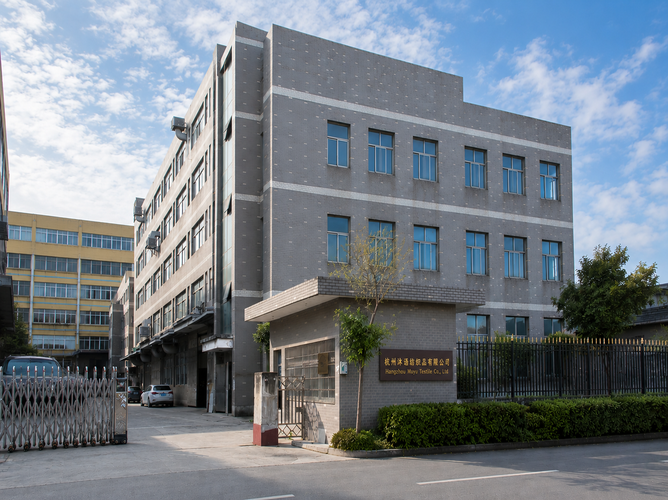
Hangzhou Muyu Textile Co., Ltd. is a jacquard manufacturer based in Hangzhou, Zhejiang Province, with production experience spanning nearly twenty years. The company was formally incorporated in 2018, but its manufacturing operations date back to around 2006, when it began as a weaving facility serving local garment factories in the region.
The company expanded its production capacity steadily as its order book grew. Today the factory occupies 6,000 square meters and operates 26 jacquard machines with a workforce of approximately 60. The facility handles both large-volume production runs and small-batch custom orders, with minimum order quantities starting at 1 to 2 pieces across most product categories. Its main export markets include North America, Western Europe, and Oceania, and the company has built a base of repeat wholesale buyers in each region.
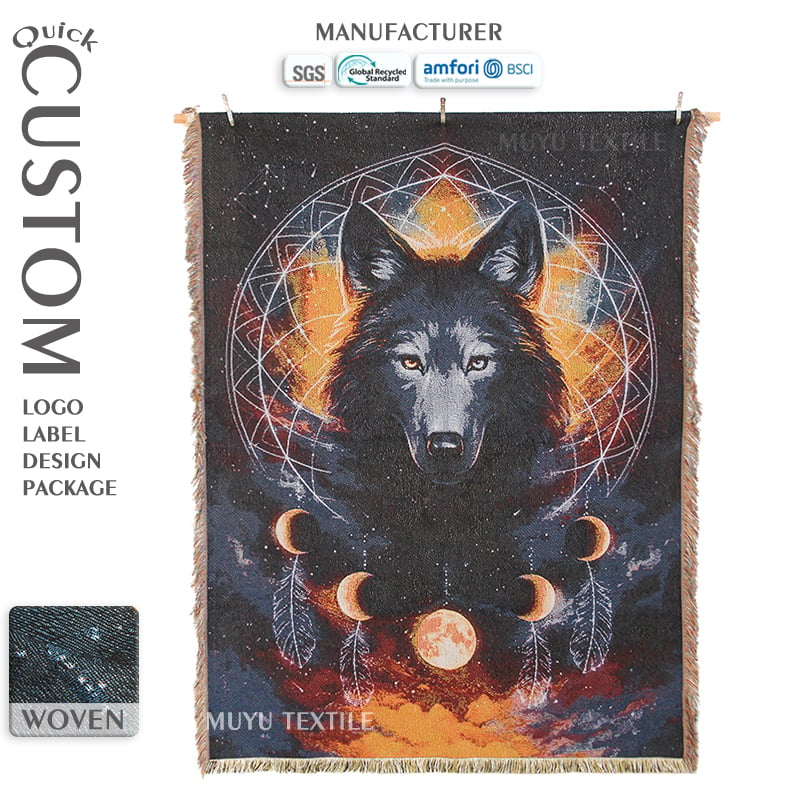
A key development in the company's trajectory was the establishment of an in-house design and R&D unit. This investment allowed Muyu to offer original product development alongside its OEM and ODM services, rather than operating solely as a contract manufacturer executing buyer-supplied specifications. The design team develops seasonal collections, produces custom samples based on client artwork and brand guidelines, and manages the technical conversion from design file to production-ready weaving program. Over time, this capability has expanded the company's product scope from jacquard fabric and woven blankets into decorative home textiles, accessories, and jacquard-woven apparel.
The company holds current third-party certifications including factory audit credentials from recognized international bodies. Its quality management system covers raw material inspection at intake — fiber length, tensile strength, and color uniformity testing on every incoming yarn batch — and finished product inspection before dispatch, with a dedicated QC team of six inspectors. Customer inquiries are typically responded to within hours, and the company maintains consistent communication throughout the production and shipping cycle. The factory's annual output capacity supports both recurring wholesale programs and one-off custom projects, and the company is currently expanding its production capabilities to serve a growing international client base.
Muyu's product range divides into two main segments: home textiles and jacquard apparel, with customization available across both.
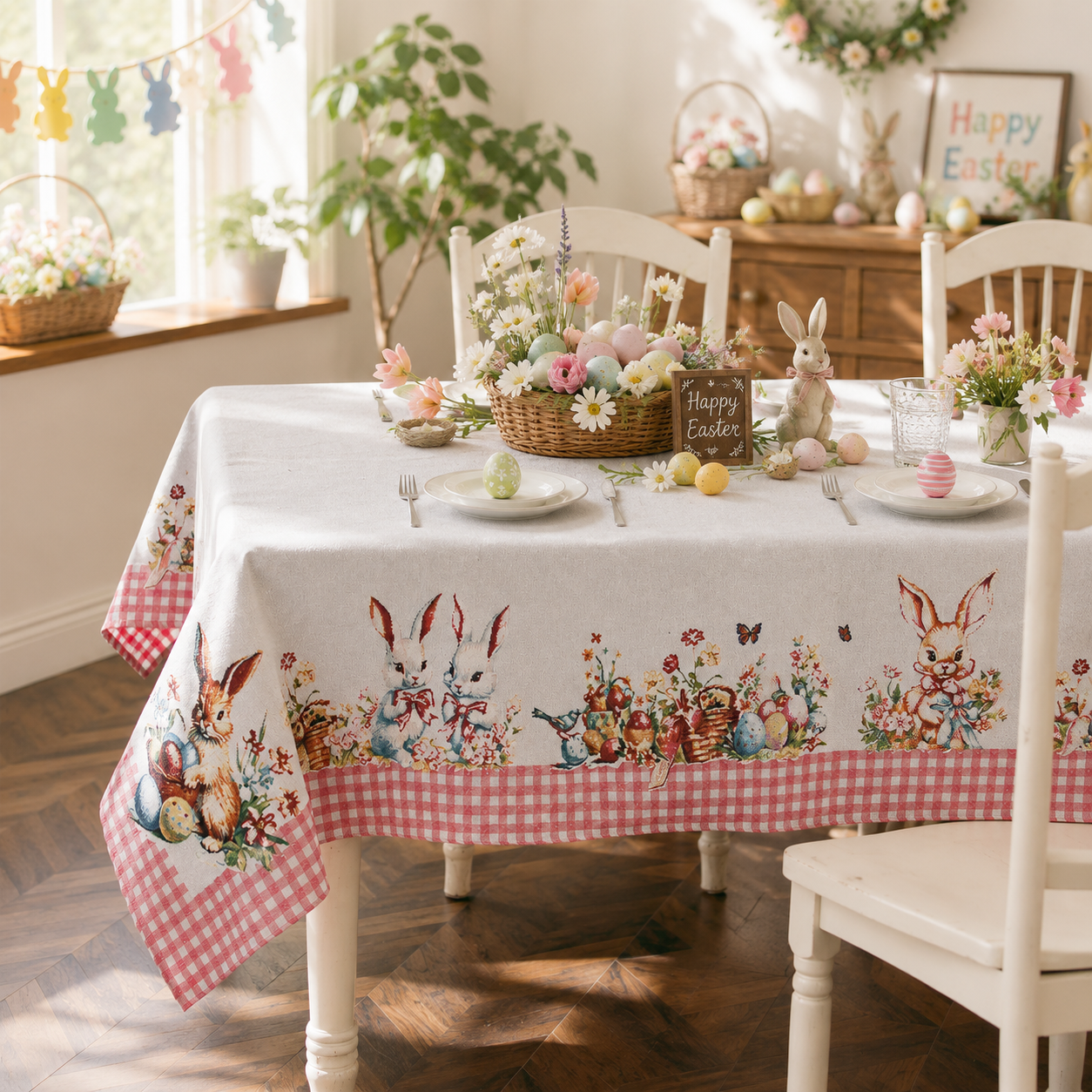
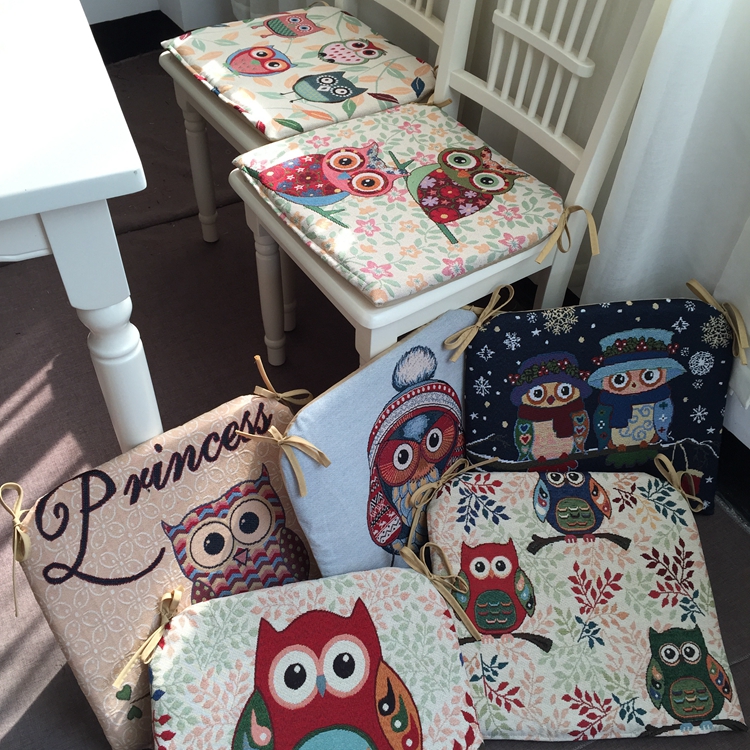
The home textile segment includes woven blankets in several construction types — cotton throws, outdoor and picnic rugs, holiday-themed designs, and photo-customized tapestry pieces — along with cushion covers, table runners, placemats, wall hangings, and sublimation-printed décor items. The accessories range covers reusable jacquard tote bags and shopping bags produced from the same woven material as the blanket line. Buyers across this segment typically source for home goods retailers, hospitality suppliers, boutique décor brands, and corporate gift programs.
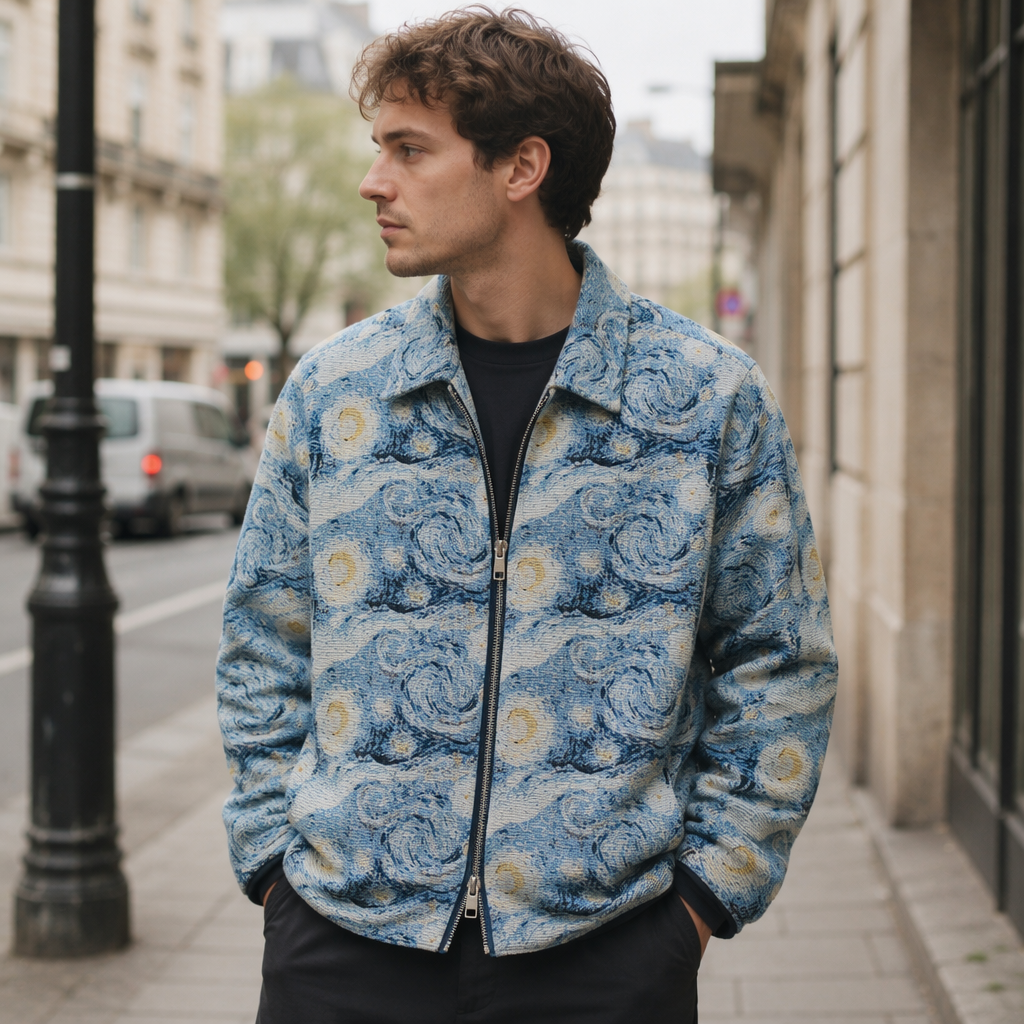
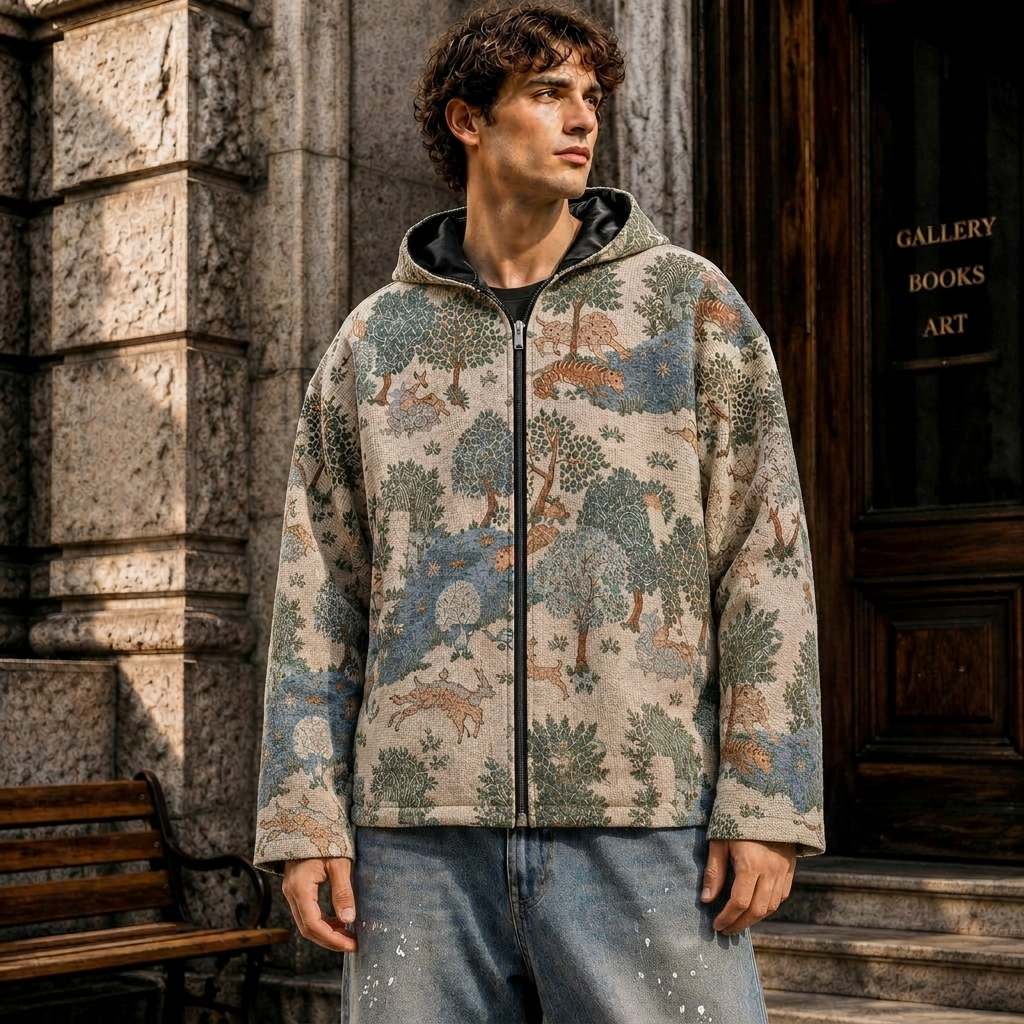
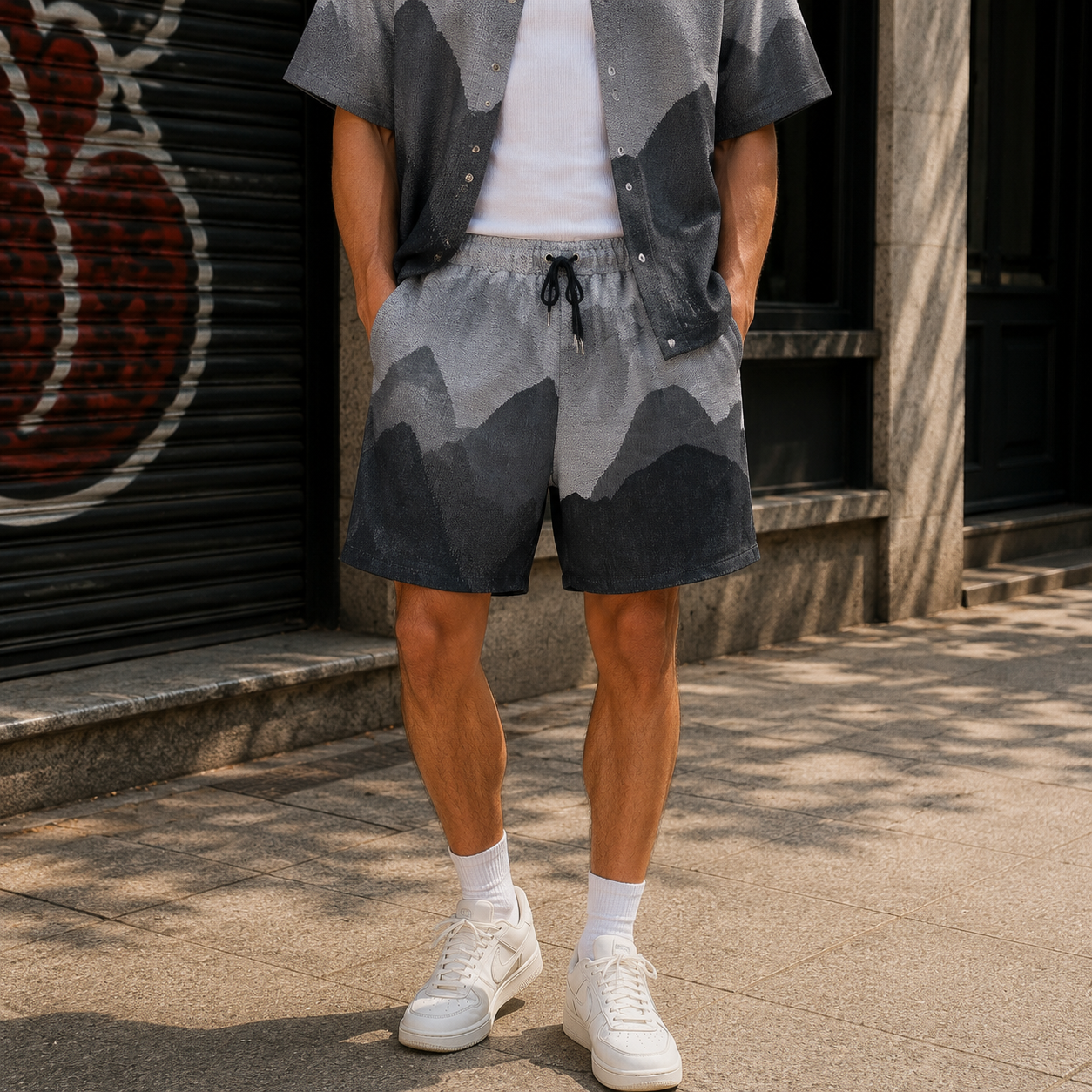
The apparel segment covers jackets and hoodies where the jacquard pattern is physically woven into the fabric rather than printed or transferred onto the surface. Jacket styles include zip-up, bomber (340gsm fabric weight), baseball, basketball, and varsity cuts for men and women. Hoodie designs range from anime patchwork pullovers to vintage-inspired zip-up styles. These products serve streetwear labels, music merchandise companies, independent clothing brands, and event merchandise buyers who require low minimum order quantities for custom-designed pieces.
The company sources cotton, recycled cotton, and cotton-polyester blend yarns from a stable network of domestic mills with which it has maintained multi-year supplier relationships. The recycled cotton product line has gained particular traction with European and North American buyers who track sustainability credentials in their supply chain documentation. Cotton-based fabrics provide natural antistatic performance — a practical advantage over synthetic fleece alternatives — and the products are machine-washable with colorfast dyeing.
Buyers working with Muyu on custom orders follow a defined workflow: the client submits artwork and material preferences, the R&D team prepares a digital proof and a production sample if requested, and after approval the order moves into the production queue. Lead times vary by order size and product complexity. The company's website organizes the product catalog into clear category navigation with full-size photography, close-up texture views, stated MOQ details, and a direct path to the customization inquiry form on each product page. A virtual factory tour is available on the site for buyers who wish to preview the production floor and quality control stations before placing an order or scheduling an in-person visit.
Production at the Hangzhou facility follows five linked stages from raw material to finished goods.
Yarn intake and inspection. Cotton, recycled cotton, and blend yarns arrive from pre-qualified domestic suppliers. The six-person QC team tests each batch for fiber length, tensile strength, and color uniformity before the material is released to inventory. Material that does not meet specification is rejected at this stage and returned to the supplier. This upstream control prevents downstream quality issues that would be difficult and costly to correct after weaving.
Design-to-program conversion. Buyer artwork — logos, illustrations, photographs, or brand pattern files — is converted into jacquard weaving programs by the R&D team. Each design element is mapped to thread intersections within the weave structure, with the program setting yarn color assignments across the warp and weft, fabric density parameters, and pattern alignment coordinates. The resulting file directly controls loom output.
Warping and loom setup. Approved warp yarn is wound onto beams at controlled tension using sectional warping equipment, then mounted onto the looms. Tension consistency across the full beam width is critical for fabric quality — uneven warp tension produces visible banding and structural weak points in the finished material that cannot be remedied after weaving.
Weaving. The 26 electronic jacquard machines control each warp thread individually through electronically actuated harness cords. This independent thread control is what enables the detailed multi-color patterns that characterize the product line. Operators monitor yarn feed speed and pattern registration throughout each production run, correcting deviations as they are detected rather than discovering issues after the run is complete.
Finishing and quality control. Blanket products go through edge finishing — hemming or fringe attachment — and a controlled wash cycle that stabilizes finished dimensions and adjusts hand feel to the specified target. Apparel panels follow a cut-and-sew sequence: precision cutting to pattern, stitching, liner insertion (silk liners on select jacket models), and hardware attachment, before reaching final inspection. Each finished piece is checked for weave defects, color consistency against the approved reference sample, dimensional accuracy against the specification sheet, and overall presentation quality. Items that do not pass inspection are segregated for rework or scrapped.
This end-to-end workflow is designed to ensure that repeat orders are consistent with prior shipments and that quality is maintained across production batches regardless of order size — from 2-piece custom samples to multi-thousand-unit production runs.
To receive a quotation, send your design concept, preferred materials, and target order quantity. The team typically responds within one business day with pricing, lead time estimates, and information on whether an existing sample can be referenced or a new production sample is recommended. The full product catalog and virtual factory tour are accessible on our website, and the team can arrange physical sample shipments for qualified buyers evaluating the product quality before committing to a production order.
 Hot News
2026-10-26
2026-10-22
2026-10-17
2026-10-13
2026-10-08
2026-09-25
Hangzhou Muyu Textile provides premium jacquard home textiles and tapestry clothing for global brands. 20+ years' expertise, BSCI-audited factory, in-house production, fast sampling (3–10 days). Contact us today!
Hangzhou Muyu Textile Co., Ltd., Xiajiang Village, Xintang Sub-district, Xiaoshan District, Hangzhou City, Zhejiang Province
Copyright © 2026 By Hangzhou Muyu Textile Co., Ltd. Privacy Policy
 EN