
 EN
Introduction to the Tapestry Hoodie Phenomenon
In recent seasons, tapestry and jacquard-woven apparel have evolved from niche runway experiments into absolute essentials of modern high-end streetwear. Unlike standard cotton hoodies that rely entirely on surface printing or basic embroidery, a tapestry hoodie integrates intricate, yarn-dyed patterns directly into the core textile structure. For fashion enthusiasts, collectors, and independent clothing brands alike, selecting the right piece requires looking far beyond surface aesthetics. Understanding foundational elements such as craftsmanship, fabric composition, textile engineering, and production provenance helps identify genuinely exceptional garments capable of enduring daily wear. In a market flooded with fast-fashion alternatives, knowing how to critically assess these woven masterpieces ensures superior investment value and authentic sartorial expression—without feeling overly rigid or corporate.
The Anatomy of Jacquard Weaving and Fabric Engineering
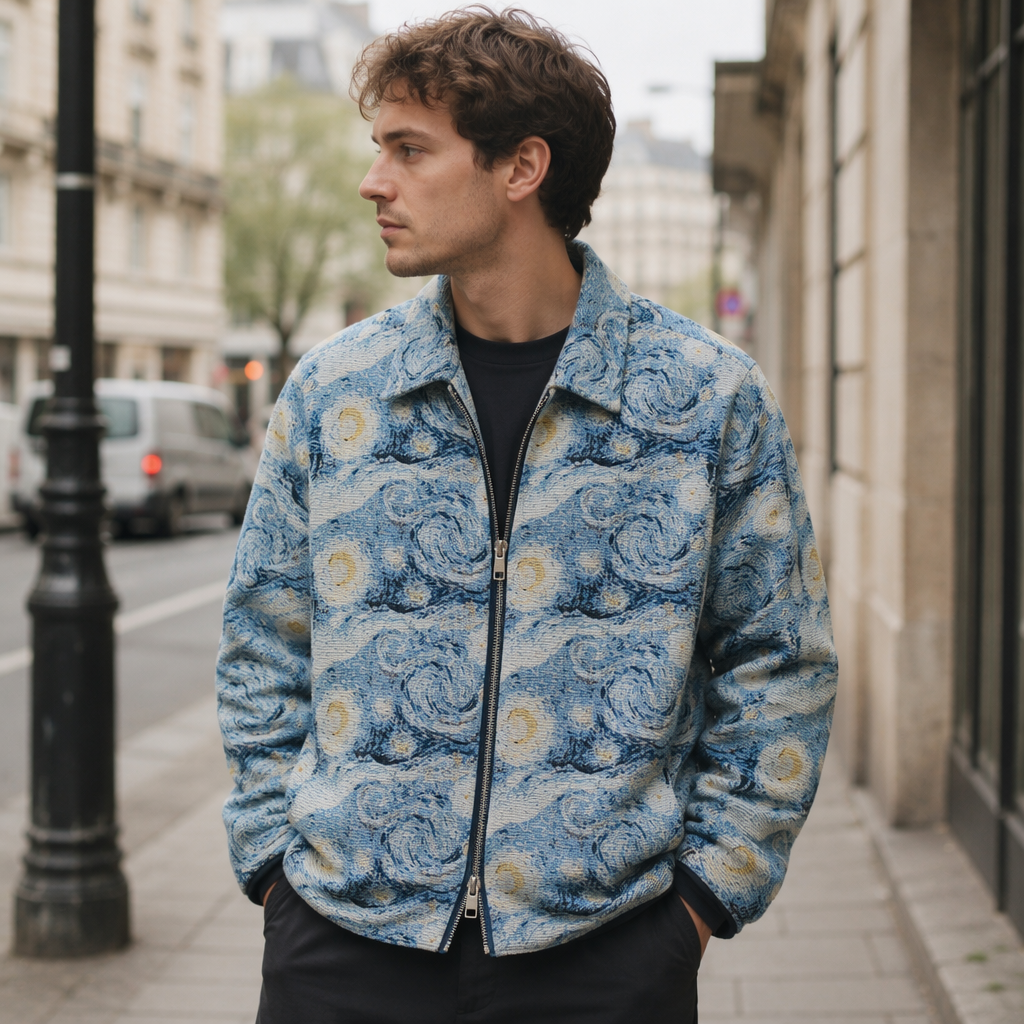
The backbone of any superior tapestry hoodie lies firmly in its underlying weaving technology and yarn composition. Technical assessments of various jacquard textiles reveal a stark contrast between multi-ply yarn-dyed weaving and superficial digital printing. High-end tapestry fabrics utilize dense interlacements of combed cotton, durable polyester, and specialized elastane or rayon blended yarns, delivering a substantial GSM that provides natural structure, heavy drape, and reliable warmth. Yarn-dyed jacquard fabrics resist fading much better than printed alternatives because color pigments lock directly into the core fiber matrix during multi-axis weaving. Furthermore, advanced computerized looms allow for photorealistic or complex abstract baroque motifs featuring hundreds of unique color transitions without sacrificing overall fabric softness. When curating a collection or choosing a statement piece, look for crisp edge definition, zero floating yarn snags on the reverse side, and balanced weight distribution across panels.
Experientia practica in mundo reali in aestimando constructione vestimentorum
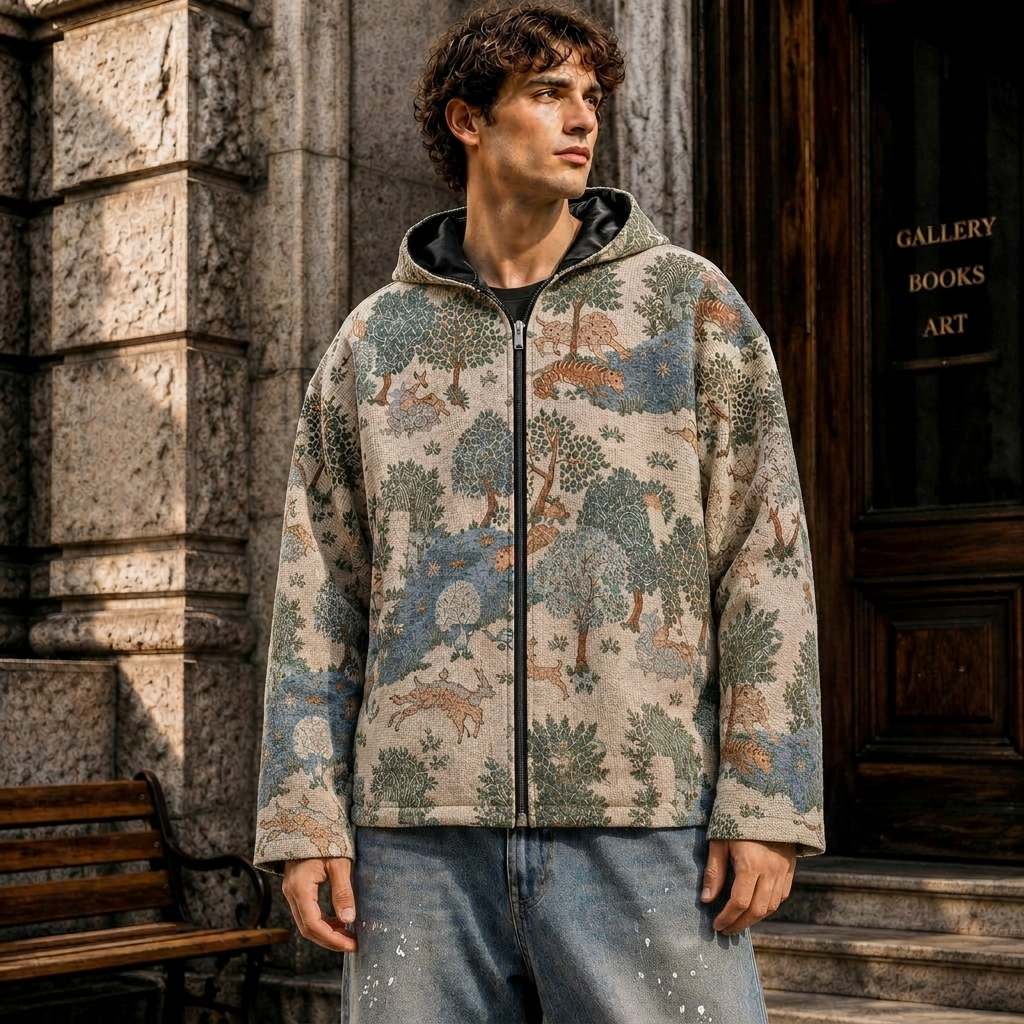
Evaluating a tapestry hoodie in real-world retail, wholesale, or sample-testing environments demands careful attention to structural integrity. Because heavy jacquard fabrics possess an architectural drape compared to traditional French terry, internal construction details completely dictate daily comfort. Premium pieces almost invariably feature smooth inner linings—such as luxurious silk satin, cupro, or lightweight breathable combed cotton—to prevent any skin irritation caused by complex internal backing yarns. Meticulous examination of seam allowances, shoulder taping, and stress points around the hood attachment and kangaroo pocket reveals true garment engineering. Reinforced double-needle stitching or bar-tacking ensures heavy fabrics maintain their structured silhouette through repeated wash cycles. A well-crafted tapestry hoodie balances artistic flair with everyday wearable utility, functioning seamlessly as both a standalone statement art piece and a versatile layering staple in urban wardrobes.
Aesthetic Complexity, Customization, and Trend Forecasting
Artistic expression defines the ultimate appeal of modern tapestry streetwear, making design resolution and motif complexity critical selection criteria for discerning buyers. Contemporary street culture leans heavily toward maximalist aesthetics, vintage tapestry reinterpretations, and custom graphic storytelling woven straight into the textile rather than applied on top. When brands design these hoodies, calculating yarn tensions, warp-and-weft densities, and palette restrictions prevents pixelation or muddy transitions. For creative directors and brand owners, mastering these technical limitations opens up limitless possibilities for unique capsule collections. Pairing high-contrast visual depth with wearable colorways that complement diverse skin tones ensures garments command attention on social media feeds and city streets alike, satisfying global fashion audiences from Tokyo to New York.
Maiestas in Catena Summatoria et Societates Directae in Fabricatione
Pro brandis vestiariis novis et mercatoribus universalibus, qui operas suas profitabiliter augere cupiunt, societas cum fabricante perito et directo aeque necessaria est ac prima ideae designis. Si a ducibus industriae materiam emunt, qui totum processum productionis perdominant—ab intortu crudi fili et tingendo usque ad texturam finalis jacquardi, praecisam sectionem et severum controllem qualitatis—excellentia producti constans et efficentia pretii garantitur. Muyu hanc normam fabricationis exemplificat, servitia specialia OEM et ODM pro vestibus textis ad mensuram offerens. Subsidiis robustis infrastructurae catenae suppeditationis, flexibilitate in minimis quantitatibus ordinandis et praecisione technica nulla comminuta, Muyu brandis universalibus vestium stratarum vim dat ut visiones artificiales complexas in vestes praemium paratas ad mercatum convertant. Usum catenarum suppeditationis verticaliter integratarum facit ut branda tempus ducens minuant, margines lucrorum optimizent et strictam conformitatem qualitatis internationalis servent.
Conclusio et Recommandationes Strategicae ad Emptiones
Investire in vel producere cappas tapetarias primae classis requirit cognitionem integram scientiae textilium, peritiam constructionis, et executionem fidam catenae suppeditationis. Sive quaeris summum vestimentum urbanum sive incipis collectionem iacquardi magni impetus, prioritas qualitatis super vias breves longos fructus reddit. Per analysim grammatorum per metrum quadratum (GSM) textilis, per verificandum commoditatem internae vestis, per inspiciendum suturas renfortatas, et per collaborandum cum sociis manufactoribus fidelibus ut Muyu, marcae et emptores se ponunt in primo loco innovationis modernae vestis urbanae. Adopta artem texturae iacquardi, exige excellentiam structuralem sine ulla concessionem, et permitte artificiositati egregiae definire omnem collectionem vestimentorum aut emporii.
 Nuntii Calidi